Companies & money
One economy.
A different mix in every company.
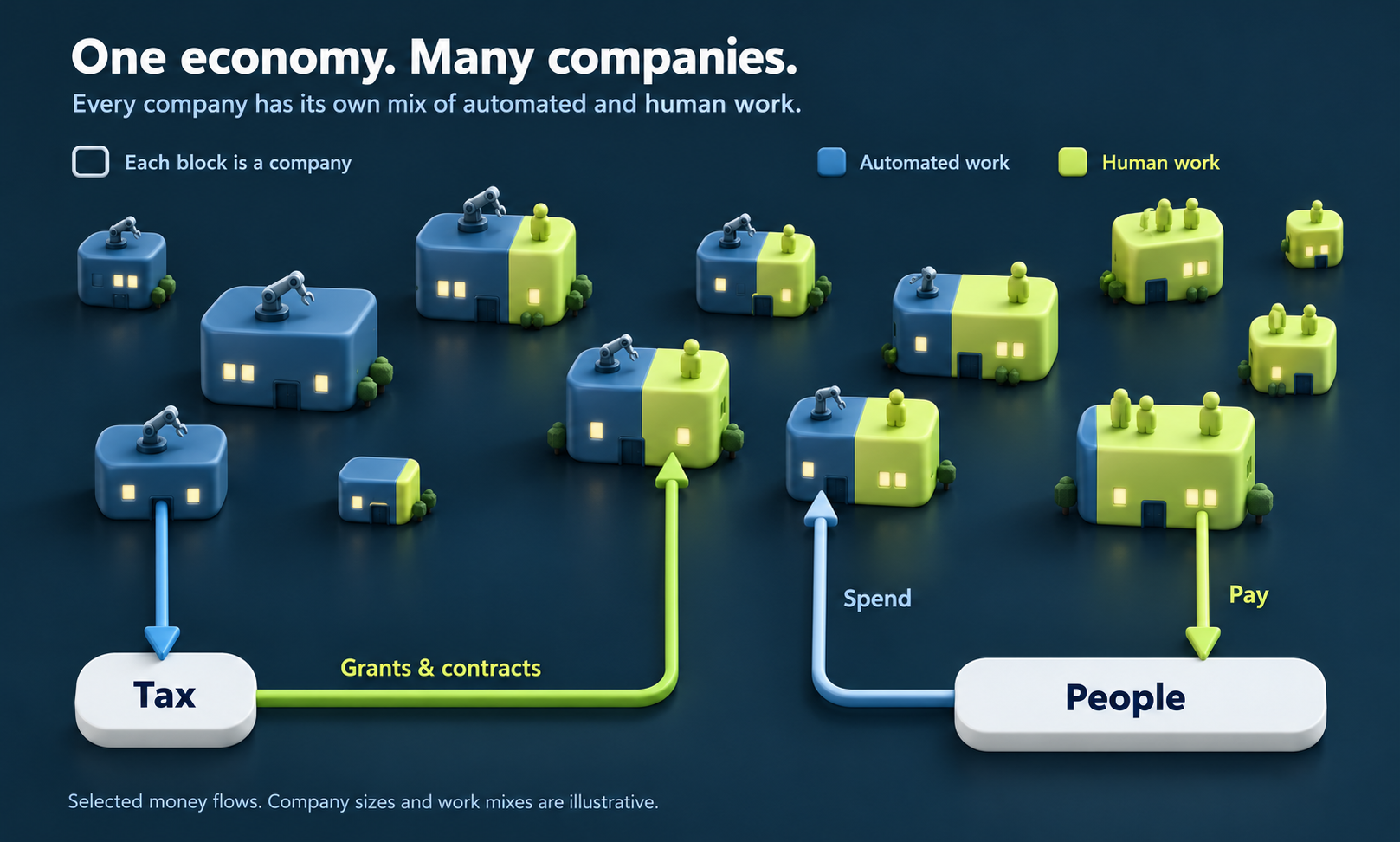
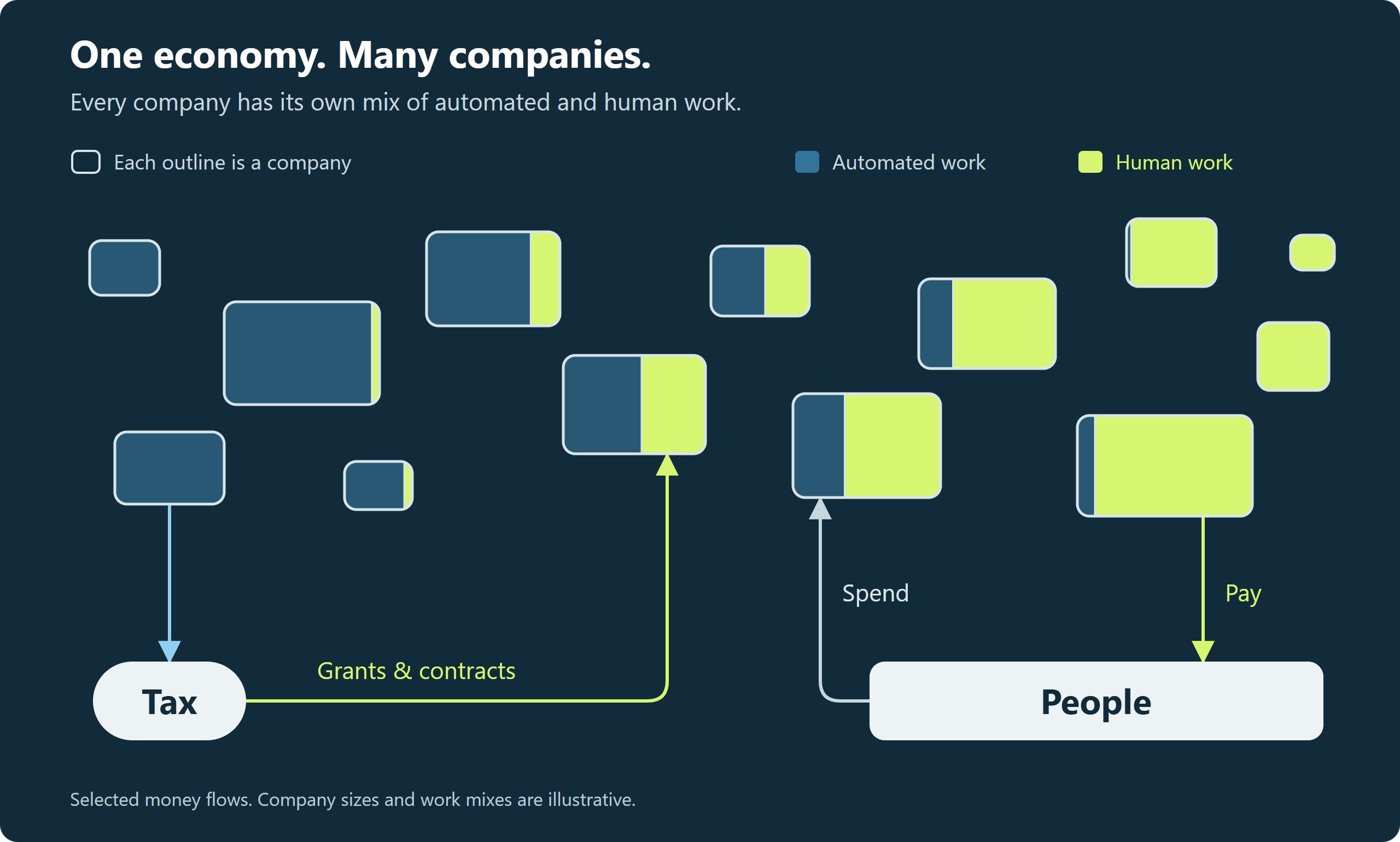
Companies combine automation and human work in different proportions. The mix varies between functions and changes over time.

A mix within each company
Blue is automated work. Green is human work. A company can have almost no human labour, a small personal contribution, or human work at the centre of what it offers.
AE and POE describe aspects of this shared economy. They are not fixed types of company. A company can change its mix as technology, customer preferences, and skills develop.
A person can use AI within the same task. The colours simplify that collaboration; they are not measured shares of employees, revenue, working hours, or funding.
Fund the value people provide
POE funding supports valued human work inside companies. A highly automated company can receive funding for a personal service its customers value.
Employing more people does not automatically establish a claim to funding. The case depends on the benefit delivered, demand or an approved public purpose, and workable costs.
Companies pay people for their work. People buy goods and services from companies with every mix of automation and human labour. Companies also buy from one another.
Democracy decides the balance
Three ways tax supports the POE
Government institutions
Public bodies provide services and perform public duties: education, health, infrastructure, justice, and defence. They employ people, use automation, and buy goods and services.
Grants
Companies and other organisations receive funding for agreed activities, including valued human work. They pay the people delivering that work under the programme’s terms.
UBI
Regular, unconditional payments go directly to individuals, providing an income floor and personal purchasing power. Democracy decides the amount and how it is funded.
Public institutions can administer grants and UBI as well as deliver services. A grant supports an activity; a public contract purchases goods or services. Additional help for people who need it can accompany UBI. The illustration above shows selected company flows; these three routes show the wider funding choices.
Democracy chooses tax rules, funding priorities, and programme terms. Neither the blue nor the green share sets a tax rate or funding entitlement. Company sizes, proportions, and arrows are illustrative; this is not a complete accounting model.